

The Babaylan: Mediators of the Human and Spirit Worlds

Updated: Feb 7, 2025
Ang mga Babaylan: Tagapamagitan ng mga Tao at Daigdig na Espiritwal
Understanding the Babaylan and other Philippine ritual specialists across the archipelago who are called many different names is essential to tracing the powerful roots of women in the Philippines. Babaylan, a Visayan term, refers to priestesses, oralists, and healers whose services span the pre-colonial, colonial, and contemporary times. They served and continue to serve as spiritual and cultural leaders of their barangay alongside other functionaries like the Datu, Panday, and Bagani.
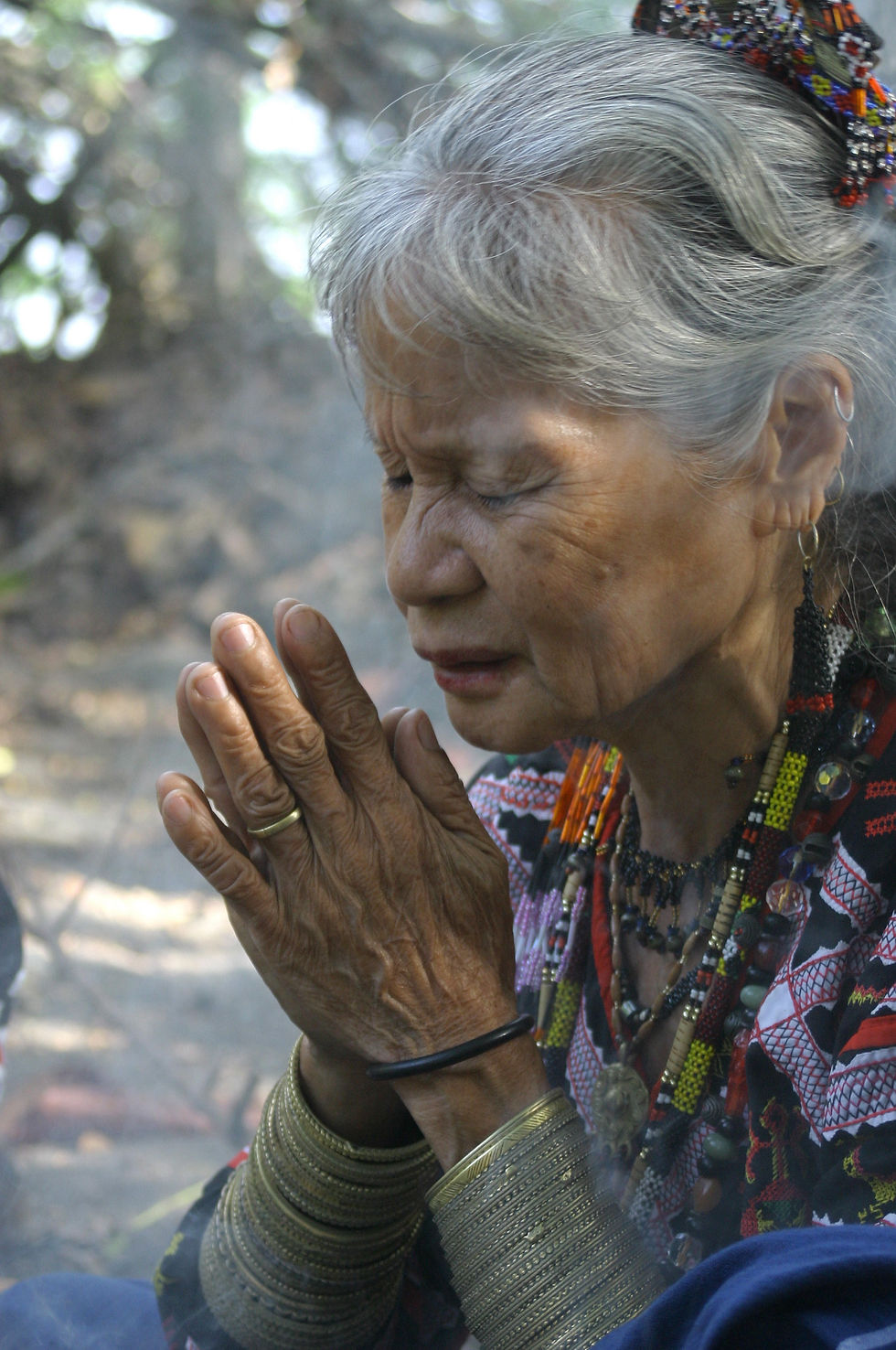
T’boli Babaylan
Mendung Sabal, a T’boli tau m’ton bu (babaylan) from Davao. As a tau m’ton bu, Men
dung served as a ritual specialist, dreamer, healer, and conflict mediator in their community.
Photo by: Skippy Lumawag; From the book by Grace Nono, Song of the Babaylan: Living Voices, Medicines, Spiritualities of the Philippine Ritualist-Oralist-Healers
While it is claimed that most Babaylan are women, historical accounts also mention male as well as transgender shamans. An example of the latter is the cross-dressing Bayog who had been described as effeminate.
In the early 17th century, while Spanish colonizers advanced their forces across the islands, Cariapa, a woman Babaylan from Bohol, foretold the future by lamenting the arrival of colonizers and the destruction they would bring:
I doubt and do not understand
What is the intent of the One
Who created this earth doomed to destruction?
There will be changes on this land;
Some people will take possession of it,
Others will inherit it.
This town shall be destroyed,
This province, this kingdom, this island.
Translation of Karyapa’s Lamentation [Rebecca Amoranto Lim in Estudio Critico de las Cartas Annuas de Filipinas]
When the Spaniards arrived, they introduced the male-dominated Catholic religion and stripped the Babaylan and other ritual specialists of their religious authority, labeling them as witches. The Babaylan led various resistance movements against the colonizers. The Spanish rooted many of them out by burning their ritual instruments and anito (ancestor spirits), and by killing a number of them. Despite this, several native ethnolinguistic groups have kept their traditions alive and continue to have Babaylan and other ritual specialists among them to this very day.

Iraya Mangyan Ritual
A ritual of the Iraya Mangyan to prepare land for kaingin (swidden farming)
References
Brewer, C. (1999). Baylan, Asog, Transvestism, and Sodomy: Gender, Sexuality, and the Sacred in Early Colonial Philippines. Intersections: Gender, History and Culture in the Asian Context, 2.
Demetrio, F. R. (1973). Philippine Shamanism and Southeast Asian Parallels. Asian Studies, 11(2), 128.
Guerrero, M. C. (2001). The Babaylan in Colonial Times: Bodies Desecrated/Body Narratives, Metaphors, and Concepts in Philippine Indigenous Religion. In S. Marcos (Ed.), Gender/Bodies/Religions (pp. 167–179). ALER Publication.
Mangahas, F., & Romero-Llaguno, J. (Eds.). (2006). Centennial Crossings: Readings on Babaylan Feminism in the Philippines. C & E Publishing.
Martinez-Sicat, M. T. (1996). The Filipino Woman and/in the Filipino Rebel. Review of Women's Studies, 5, 173.
Nono, G. (2013). Songs of the Babaylan: Living Voices, Medicines, Spiritualities of Philippine Ritualist-Oralist-Healers. Institute of Spirituality in Asia.
Nono, G. (2021). Babaylan Sing Back: Philippine Shamans and Voice, Gender, and Place. Ateneo de Manila University Press.
Salazar, Z. A. (1999). Ang Babaylan sa Kasaysayan ng Pilipinas. Palimbagan ng Lahi.


Comments