

Philippine Revolution

Updated: Feb 7, 2025
Rebolusyong Pilipina

Gabriela Silang
(19 March 1731 - 20 September 1763),
Born in Santa, Ilocos Sur, was a Filipino revolutionary best known for her role as the female leader of the Ilocano independence movement from Spain.
Gabriela Silang, was the first female leader to spearhead a revolutionary movement against Spanish colonial rule. She and her husband, Diego Silang, led the Ilocos independence movement in 1762. Gabriela led nearly 2,000 troops against the Spaniards but was eventually captured and hanged in Vigan. Her legacy endures through women's organizations and the Order of Gabriela Silang, an all-female order.

Marina Dizon
(18 July 1875 – 25 October 1950)
Born in Tondo, Manila, was a heroine of the Philippine Revolution and one of the first women initiated into the Katipunan. She kept important documents for the Katipunan.
Marina Dizon, joined the Katipunan in 1893 and was elected as the first Secretary of the Katipunan’s women’s chapter. She would also perform in front of the Guardia Civil to divert attention from secret revolutionary meetings. While fleeing the Guardia Civil, she burned important Katipunan documents to prevent their capture.

Marcela Marcelo
(1869 - 21 March 1897)
Born in Malibay, then part of Paranaque, and known as Selang Bagsik, was a Filipina general in the Katipunan who fought during the Philippine Revolution against Spanish Colonial rule and was known to be armed with only a bolo.
Marcela Marcelo, also known as "Selang Bagsik" (Ferocious Sela) of Malibay, joined the battlefields armed only with a bolo. She died during the Battle of Pasong Santol in Cavite while leading soldiers in defense. She would later be depicted on the members' certificate of the Veteranos de la Revolucion.
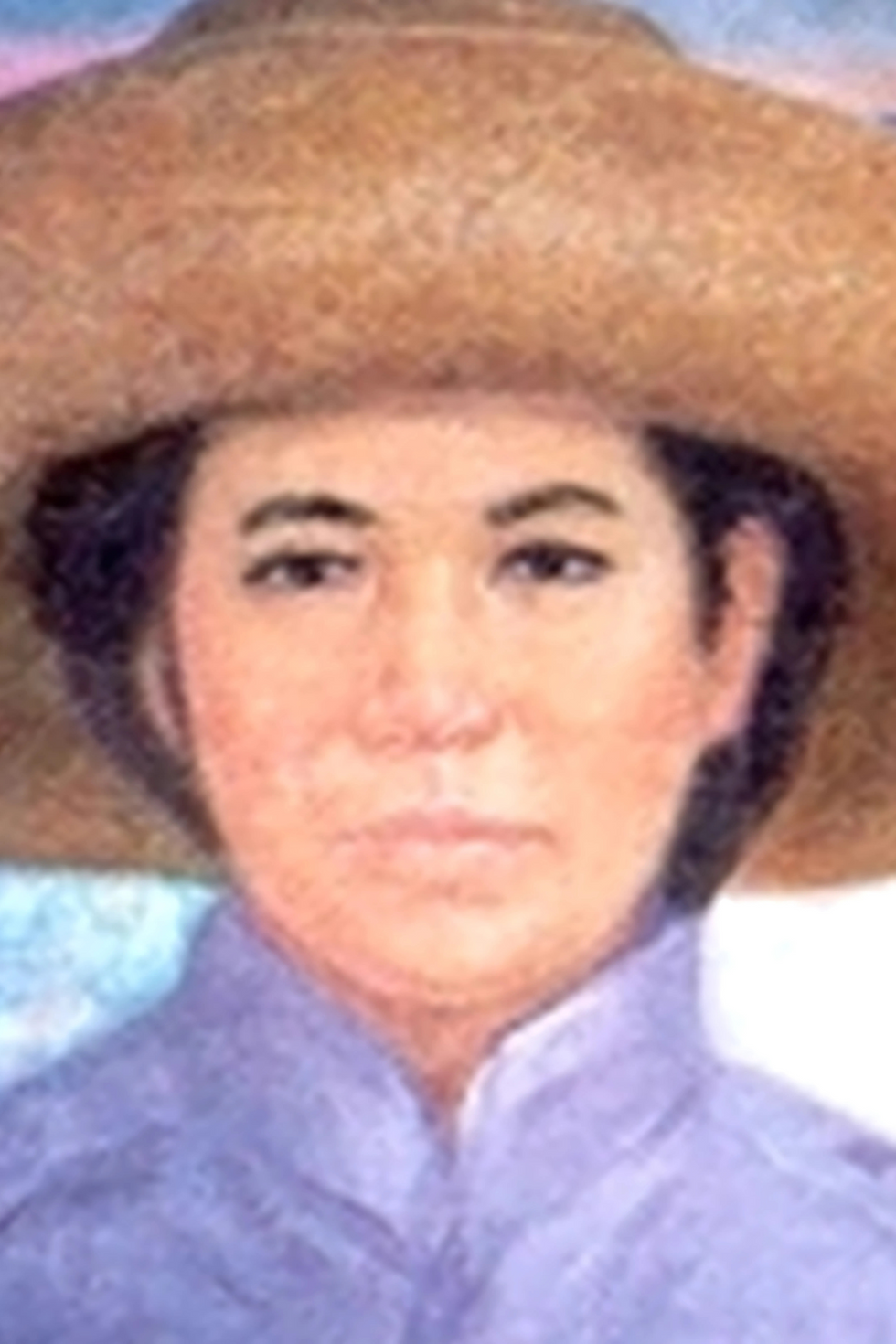
Trinidad Tecson
(18 November 1848 – 28 January 1928)
Born in San Miguel, Bulacan, known as the "Mother of Biak-na-Bato" and "Mother of Mercy,"
fought to gain the Philippine's independence.
Trinidad Tecson, known as the "Mother of Biak-na-Bato," bravely acquired arms and ammunition by entering courthouses and jails and overpowering the Guardia Civil. She served as both a combatant and a nurse. Trinidad participated in 12 battles against the Spaniards.

Gregoria de Jesus
(9 May 1875 - 15 March 1943)
Born in Caloocan, also known as Oriang, was the founder and vice-president of the women's chapter of the Katipunan of the Philippines. She was also the custodian of the documents and seal of the Katipunan.
Gregoria de Jesus, known as "Oriang" and wife of Supremo Andres Bonifacio, served as the Vice President of the Katipunan's women's chapter. As a top officer and skilled soldier, Oriang endured many hardships during the revolution. After Andres Bonifacio's execution, she lived in the mountains with other revolutionaries, where she met Julio Nakpil. Oriang and Julio later married and had eight children.

Rosa Sevilla Alvero & Florentina Arellano
Rosa Sevilla Alvero (4 March 1879 - 11 May 1954) (the women in the middle left) born in Tondo, Manila and Florentina Arellano (1879-1928) (the women in the middle right) were female contributors to the newspapers La Independencia and La Republica, publications of the Philippine Revolution.
Rosa Sevilla–Alvero and Florentina Arellano were propagandists who contributed to the revolutionary publications El Heraldo de la Revolucion (The Herald of the Revolution) and La Independencia (The Independence).
References
Zaide, G. F., & Zaide, S. M. (1988). Gabriela Silang (1731–1763) Joan of Arc of Ilocandia. In Rizal and other great Filipinos (pp. 97–99). National Book Store.
Office of the President of the Philippines. (2003). Executive order number 236 (2003) on honors code of the Philippines (EO/236). https://lawphil.net/executive/execord/eo2003/eo_236_2003.html
Churchill, B. R. (1995). Marina Dizon Y Bartolome: Wife of Jose Turiano Santiago. In S. Soriano (Ed.), Women in the Philippine revolution (pp. 33–35). Printon Press.
Quindoza-Santiago, L. (1997). Marina Dizon. In Tales of courage & compassion: Stories of women in the Philippine revolution (pp. 22–25). DIWATA Foundation and HASIK Inc.
Medina, I. (1995). Marcela Marcelo: Wife of Quirico Lugo. In S. Soriano (Ed.), Women in the Philippine revolution (pp. 80–82). Printon Press.
Quindoza-Santiago, L. (1997). Marcela Marcelo Y Lugo. In Tales of courage & compassion: Stories of women in the Philippine revolution (pp. 69–71). DIWATA Foundation and HASIK Inc.
Romulo, L. T. (1995). Trinidad Tecson Y Perez: Wife of Julian Alcantara, later of Doroteo Santiago, and lastly Francisco Empainado. In S. Soriano (Ed.), Women in the Philippine revolution (pp. 145–151). Printon Press.
Medina, I. (1995). Gregoria de Jesus: Wife of Andres Bonifacio and later of Julio Nakpil. In S. Soriano (Ed.), Women in the Philippine revolution (pp. 55–64). Printon Press.
De Jesus, G. (n.d.). Ang mga maybahay: Gregoria de Jesus. Bahay Nakpil Bautista. https://bahaynakpil.org/gregoriadejesus/
Zaide, G. F., & Zaide, S. M. (1988). Gregoria de Jesus (1875–1943): Lakambini of the Katipunan. In Rizal and other great Filipinos (pp. 108–111). National Book Store.


Comments