

Women in the Field of Arts

Updated: Feb 5, 2025
Mga Babae sa Larangan ng Sining

Leona Josefa Florentino
(1849)-1884)
As a poet who wrote in Spanish and Ilocano. She is considered as the mother of
Philippine women's literature.
Panitikan
Leona Florentino (“Mother of Philippine Women’s Literature”), Paz Marquez Benitez (short story writer, educator, and editor), Ruth Elynia Mabanglo (poet, educator, and playwright), Merlie Alunan (poet, essayist, and literary critic), Lualhati Bautista (short story writer, novelist and activist), Lilia Quindoza-Santiago (poet, literary critic, and educator), Aida F. Santos (feminist activist, writer, and poet), Edith L. Tiempo (National Artist for Literature), Marjorie Evasco (poet, educator).
Blasted Hopes
One of Leona Florentino’s most famous poems is Nalpay A Namnama (Blasted Hopes).
Poets Ruth Elynia S. Mabanglo with Lilia Quindoza Santiago translated the original Ilocano into English and Filipino.
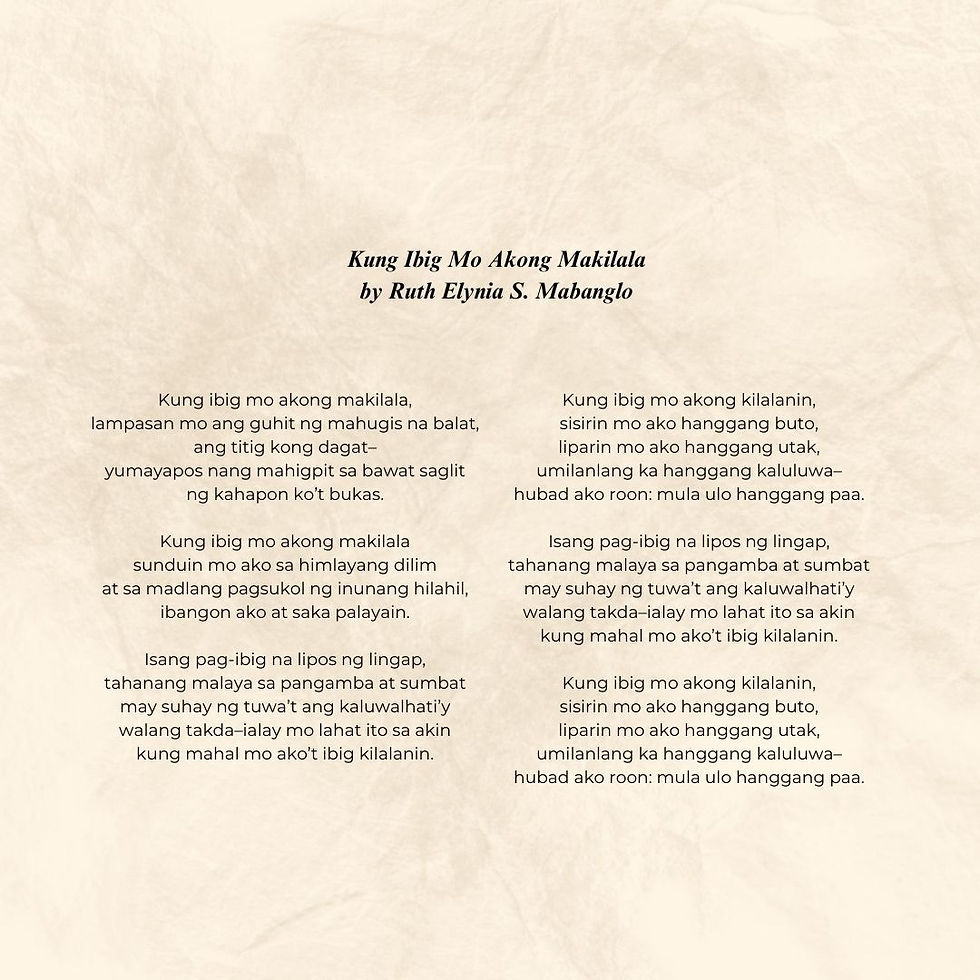
Kung Ibig Mo Akong Makilala
Poem by Ruth Elynia Mabanglo

Aida Santos
Sa Kabataang Kababaihang Naglalakbay sa Daan ng Feminismo by Aida F. Santos
From Pana-Panahon: Isang Tanong, Isang Sagot at Iba Pang Tula (2005). Akdang_Bayan. Lungsod ng Quezon
Habi at Batik

Tattooed Woman
In Kalinga, some women are marked with the Sinokray (necklace or sleeve tattoos), a rare tattoo that creates an illusion of the upper garment.
Illustration by Ed Bersamira and caption by Analyn Salvador-Amores
Paghahabi (weaving) From north to south, women from diverse indigenous communities practice weaving using materials like cotton, abaca, and piña. Rooted in spiritual tradition, weaving serves as a medium for communication with spirits. Textiles crafted for clothing and rituals feature symbolic patterns that convey high status or prestige.
Batok is the cultural practice of the traditional tattooing method. Both men and women wore tattoos, which have different symbolism. Women's tattoos can serve as protection against malevolent spirits or a symbol of certain status or prestige.
Sining Biswal

Pelagia Mendoza
Pelagia Mendoza, unang babaeng eskultor
Paz Paterno, Pelagia Mendoza, Julie Lluch, Brenda Fajardo, Imelda Cajipe Endaya, Nena Saguil, and Pacita Abad, Anita Magsaysay-Ho, and Ana Fer.
Musika, Sayaw at Teatro

Dolores Paterno
(10 March 1854 – 3 July 1881)
Born in Sta. Cruz, Manila, was an esteemed composer during the Spanish era.

Inang Laya
Inang Laya is a Filipino folk music duo known for its activist lyrics. Inang Laya performing in a rally in Liwasang Bonifacio, 1984.
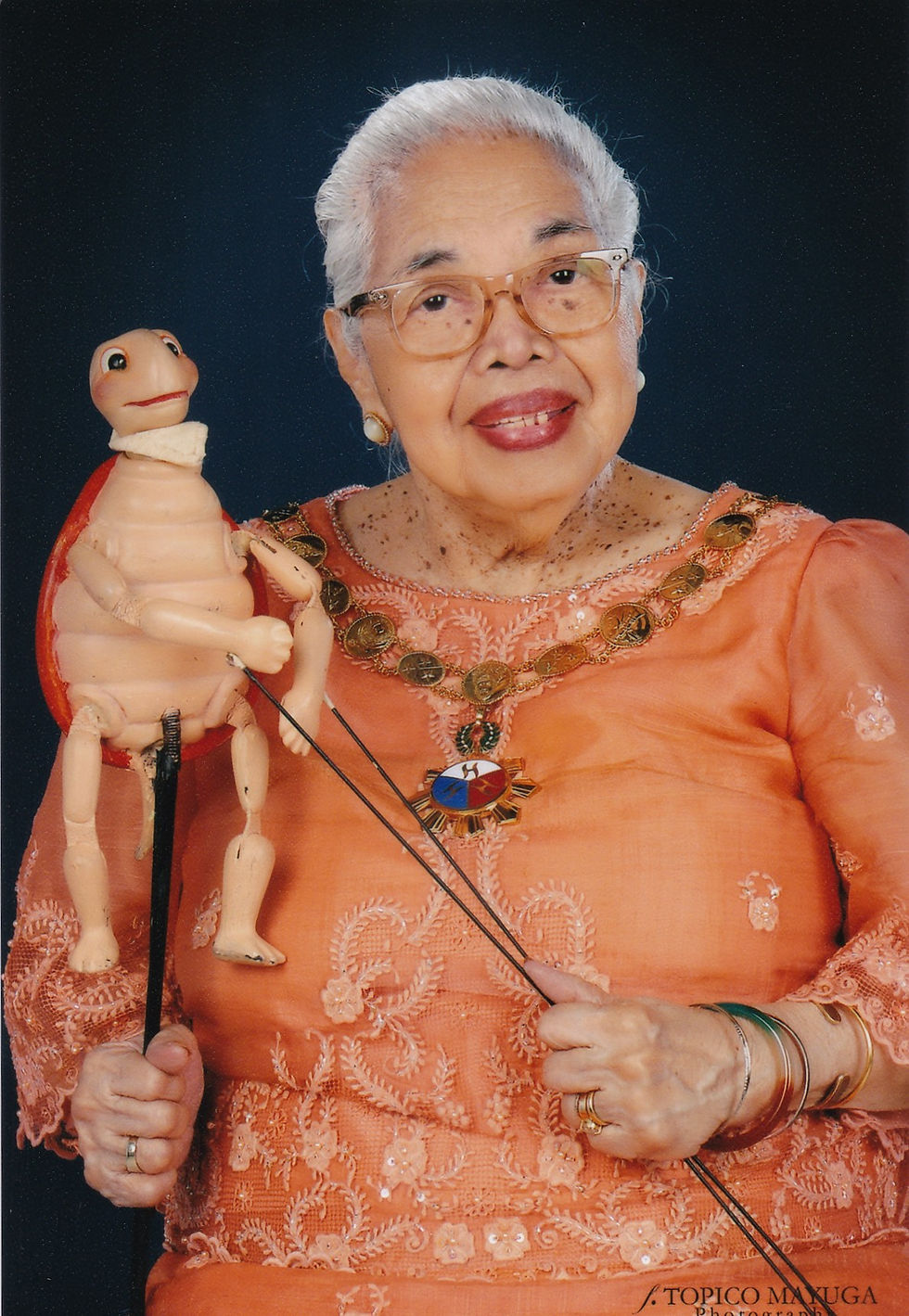
Amelia Lapeña-Bonifacio
Amelia Lapeña-Bonifacio, the "Grande Dame of Southeast Asian Children's Theatre” and
National Artist for Theater.
Dolores Paterno (composer of “La Flor de Manila” or Sampaguita), Inang Laya (filipina progressive feminist folk duo), Lucresia Kasilag (composer, pianist and National Artist of the Philippines for Music), Bayang Barrios (Manobo musician and singer known for her use of Indigenous instruments and style), Grace Nono (performing artist and ethnomusicologist), Susan Fernandez (singer and activist), Francisca Reyes-Aquino (Mother of Filipino Folk Dance and National Artist of the Philippines for Dance), Cecile Guidote-Alvarez (Founder of Philippine Educational Theater Association (PETA)), Leonor Orosa-Goquingco (Mother of Philippine Dance Theater and National Artist), Marilou Diaz-Abaya (National Artist for Film and Broadcast Arts), Laurice Guillen (Actor and Film Director)

Sampaguita
The composition Sampaguita is one of Dolores Paterno's most notable works.

Filipinescas
Filipinescas, created by National Artist Leonor Orosa-Goquingco

Grace Nono
Grace Nono is an ethnomusicologist, scholar, music performer, and cultural worker.
Photo by: Andrew Contreras

Susan Fernandez
Susan Fernandez, teacher and feminist singer
Photo by Farlet Vale
Ligaya Fernando-Amilbangsa (Dancer and cultural researcher, Ramon Magsaysay Awardee), Honorata “Atang” dela Rama (singer, first Filipina actress, National Artist for Theater and Music), Daisy Pardo Hontiveros-Avellana (“First Lady of Philippine Theater” and National Artist for Theater and Film), Amelia Lapeña-Bonifacio (Grande Dame of Southeast Asian Children's Theatre)
References
Salvador-Amores, A.I.V. (2002). Batek: Traditional Tattoos and Identities in Contemporary Kalinga, North Luzon Philippines. Humanities Diliman: A Philippine Journal of Humanities, 3(1), 105-142.


Comments